
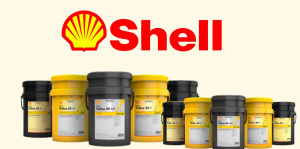
Industrial gearboxes are the muscle of heavy manufacturing, mining, cement production, power generation, and oilfield operations. They transmit enormous torque loads quietly and reliably — until they don’t. When a gearbox fails, production stops. Unplanned downtime in facilities across the UAE and wider GCC region can cost tens of thousands of dollars per hour. The single most common preventable cause of premature gearbox failure is inadequate lubrication: wrong oil type, wrong viscosity grade, contaminated oil, or oil that has degraded beyond its service life.
This guide is designed for maintenance engineers, procurement managers, reliability teams, and operations supervisors who need to understand industrial gear oils from the ground up — covering how they work, how to select the right grade, what the ISO and AGMA standards actually mean, how to recognize and prevent common failure modes, and why Shell Omala S2 GX has become one of the most trusted gear oil ranges for heavy-duty industrial and oilfield applications across the Middle East.
Contents
- 1 Part 1: Understanding Industrial Gearboxes and Why Lubrication Is Critical
- 2 Part 2: The Science of Gear Oil — What Makes a Good Industrial Gear Lubricant?
- 3 Part 3: Shell Omala S2 GX — A Technical Overview
- 4 Part 4: Choosing the Right Shell Omala S2 GX Grade
- 5 Part 5: Industrial Applications in the UAE and Gulf Region
- 6 Part 6: Gear Oil Maintenance Best Practices
- 7 Part 7: Shell Omala S2 GX vs. Conventional Mineral Gear Oils — The Business Case
- 8 Where to Source Shell Omala S2 GX in the UAE
- 9 Quick Reference: Shell Omala S2 GX Grade Selection Guide
Part 1: Understanding Industrial Gearboxes and Why Lubrication Is Critical
What Happens Inside an Industrial Gearbox?
An enclosed industrial gearbox is a precision system in which hardened steel gear teeth mesh at speed under load. Every time a tooth comes into contact with its mating tooth, the contact stress at the tooth flank can reach values exceeding 1,000 MPa — comparable to the pressure at the tip of a needle pressed with enormous force. This happens thousands of times per minute, every minute, every hour the equipment is running.
The lubricant film between those meshing teeth must be thick enough to prevent direct metal-to-metal contact, but fluid enough to circulate efficiently, carry heat away from the contact zone, and drain back to the sump for recirculation. At the same time, the oil must protect the bearing surfaces within the gearbox, resist foaming under churning conditions, remain stable against oxidative degradation at elevated temperatures, and resist contamination by water ingress — a particular challenge in coastal UAE and offshore Gulf environments.
When lubrication fails — whether because the oil is too thin to maintain a protective film, too degraded to provide adequate viscosity, or contaminated with water or particles — the consequence is accelerated wear, surface fatigue, and eventually catastrophic gear or bearing failure.
Types of Industrial Gear Systems
Not all gearboxes are the same, and the type of gear system directly influences lubricant selection:
Parallel-axis enclosed gearboxes (spur, helical, and double-helical gears) are the most common type in industrial facilities. They operate under predominantly rolling contact with moderate sliding, and respond well to conventional EP-type industrial gear oils.
Planetary gearboxes are compact, high-torque designs used extensively in mixers, conveyors, and drilling equipment. They generate high local pressures and often require oils with enhanced load-carrying capacity.
Bevel and spiral bevel gearboxes introduce significant sliding velocity between gear tooth flanks, increasing the demand on the oil’s EP additive package to prevent scuffing and scoring.
Worm gearboxes operate almost entirely in sliding contact mode, creating some of the most demanding lubrication conditions in industrial machinery. They typically require specific compounded or EP-formulated oils.
Open gears and grinding mill gears found in cement, mining, and aggregate processing require specially formulated adhesive or open gear compounds — a distinct product category from enclosed gearbox oils.
Part 2: The Science of Gear Oil — What Makes a Good Industrial Gear Lubricant?
Viscosity: The Foundation of Gear Oil Selection
Viscosity — the resistance of a fluid to flow — is the single most important property of any gear oil. If the oil is too thin, it cannot maintain an adequate lubricant film under load. If it is too thick, it causes excessive churning losses, elevated operating temperatures, and power inefficiency.
For industrial gear oils, viscosity is expressed using the ISO Viscosity Grade (ISO VG) system, defined by ISO 3448 and ASTM D2422. Each grade represents a specific kinematic viscosity measured at 40°C (104°F), expressed in centistokes (cSt). The grade number is the midpoint of an acceptable viscosity range, with a tolerance of ±10%. So ISO VG 220 means the oil has a viscosity of 220 cSt ±10% at 40°C — i.e., between 198 and 242 cSt.
The most commonly used ISO VG grades for industrial enclosed gearboxes are:
| ISO VG Grade | Viscosity at 40°C (cSt) | Typical Application |
|---|---|---|
| ISO VG 68 | 61.2 – 74.8 | High-speed, lightly loaded gearboxes; cooler environments |
| ISO VG 150 | 135 – 165 | Moderate-duty helical gearboxes; medium-speed applications |
| ISO VG 220 | 198 – 242 | General heavy-duty industrial gearboxes; most common grade |
| ISO VG 320 | 288 – 352 | Heavy-duty, high-load applications; elevated temperatures |
| ISO VG 460 | 414 – 506 | Severe-duty, slow-speed, high-load; large industrial drives |
As a general rule, higher-load and lower-speed applications require higher viscosity grades. Conversely, high-speed gearboxes operating at relatively light loads may run better on lower viscosity grades because the churning losses and heat generation from a thick oil would outweigh the benefits of a thicker film.
Temperature plays a critical role in grade selection for Middle East operations. In the UAE, ambient temperatures can exceed 45°C in summer, and enclosed gearbox sump temperatures can reach 80–100°C under normal operating conditions. This means the effective in-service viscosity of the oil is always significantly lower than its ISO grade at 40°C. Engineers should calculate expected sump temperatures and verify that the selected oil will provide adequate film thickness at those temperatures — not just at 40°C.
The AGMA Classification System
The American Gear Manufacturers Association (AGMA) standard AGMA 9005-F16 is the other major viscosity classification system you will encounter on gearbox nameplates and OEM manuals, particularly in equipment from North American and European manufacturers active in the oilfield and petrochemical sectors.
AGMA grades correlate directly to ISO VG grades, making cross-referencing straightforward:
| AGMA Grade | Equivalent ISO VG |
|---|---|
| AGMA 2 EP | ISO VG 68 |
| AGMA 4 EP | ISO VG 150 |
| AGMA 5 EP | ISO VG 220 |
| AGMA 6 EP | ISO VG 320 |
| AGMA 7 EP | ISO VG 460 |
The “EP” suffix denotes an extreme pressure additive package — essential for most heavy-duty enclosed gearbox applications. Shell Omala S2 GX oils meet AGMA EP 9005-F16 across the available viscosity grades, making them directly applicable wherever AGMA EP specifications appear on equipment documentation.
Extreme Pressure (EP) Additives: How They Work
Conventional anti-wear (AW) additives form a protective film on metal surfaces under moderate loads by reacting chemically with the metal at the contact zone. Under very high loads or shock loading conditions, however, AW additives can be overwhelmed: the contact pressures are too high for the film to remain intact.
Extreme pressure (EP) additives — typically sulfur-phosphorus (S-P) compounds — take over under these severe conditions. When contact temperatures at the gear tooth flank spike (which they do momentarily under high shock loads), EP additives react chemically with the metal surface to form a low-shear-strength sacrificial reaction layer that prevents metal welding and scuffing. In effect, the EP additive “sacrifices” a thin layer of the metal surface to protect the bulk of the gear tooth from catastrophic damage.
For heavy-duty industrial gearboxes — particularly those found in oilfield pumping units, compressor drives, drilling rig drawworks, and large industrial processing facilities — an EP additive package is not optional. It is a minimum requirement.
Micropitting: The Silent Killer of Industrial Gears
Micropitting is a surface fatigue failure mode that has become increasingly important as gear surface finish, hardness, and load intensity have all increased with modern gearbox designs. Unlike classical pitting, which produces large, visible craters on the gear tooth flank, micropitting creates a gray, matte appearance on tooth flanks caused by millions of microscopic surface cracks and craters typically less than 10 microns deep.
Left unaddressed, micropitting progressively changes the tooth profile, increases vibration, noise, and dynamic loads, and can eventually lead to deeper pitting, tooth breakage, and catastrophic failure — all without giving obvious early warning signs.
The gear oil plays a crucial role in either inhibiting or accelerating micropitting. Oils with high film strength and appropriate EP chemistry — such as Shell Omala S2 GX — are specifically formulated to resist micropitting by maintaining a robust lubricant film even at the asperity contact level where micropitting initiates.
Part 3: Shell Omala S2 GX — A Technical Overview
The Shell Omala S2 GX range represents Shell’s conventional (mineral oil-based) EP industrial gear oil line, formulated to provide reliable, robust protection for heavy-duty enclosed gearboxes across a broad range of industrial applications. It is one of the most widely specified industrial gear oils globally, and has a long track record in facilities across the UAE, Saudi Arabia, Oman, and the broader GCC region.
Base Oil and Additive Technology
Shell Omala S2 GX is built on a high-quality mineral base oil with a balanced sulfur-phosphorus EP additive package. The formulation is designed to deliver:
- High load-carrying capacity at the gear tooth contact zone
- Strong resistance to micropitting under cyclic loading conditions
- Good compatibility with a wide range of elastomeric seals and internal coatings, reducing the risk of seal swell, shrinkage, or degradation that can cause oil leaks in enclosed gearboxes
- Effective water separation (demulsibility), allowing any water ingress to settle out rather than forming emulsions that would degrade the lubricant’s film strength
- Resistance to oxidative degradation and foam formation during high-speed gear churning
Standards Compliance
Shell Omala S2 GX meets a comprehensive list of international and OEM specifications, including:
- AGMA EP 9005-F16 — The primary North American gear oil performance standard
- ISO 12925-1 Type CKD (for ISO VG 68–460) — The ISO standard for industrial enclosed gear oil
- DIN 51517-Part 3 CLP — The German industrial standard widely referenced by European gearbox OEMs
- AIST (formerly US Steel) 224 — Required by many steel industry gearbox applications
- China National Standard GB 5903-2011 CKD/CKC — Relevant for equipment supplied from Chinese manufacturers, increasingly common in MENA industrial projects
- David Brown S1.53.101 and other key OEM approvals
This breadth of approvals means Shell Omala S2 GX can typically serve as a single approved lubricant across a facility’s diverse gearbox population, simplifying inventory and reducing the risk of cross-contamination from stocking multiple products.
Extended Oil-Drain Intervals
One of the most practically significant performance claims for Shell Omala S2 GX is its documented ability to increase oil-drain intervals by up to 200% compared to baseline mineral gear oils in some applications. In practice, this means:
A gearbox that previously required an oil drain and refill every 2,000 operating hours may be able to run for 4,000–6,000 hours on Shell Omala S2 GX before the oil needs changing — subject to regular oil condition monitoring. For large industrial facilities in the UAE running multiple gearboxes continuously, this translates directly into lower lubricant consumption, fewer maintenance shutdowns, reduced waste oil disposal costs, and lower labor costs for oil change procedures.
Part 4: Choosing the Right Shell Omala S2 GX Grade
Shell Omala S2 GX is available in five viscosity grades to cover the full range of industrial enclosed gearbox applications. Here is how to match each grade to the right application:
Shell Omala S2 GX 68
ISO VG 68 (equivalent to AGMA 2 EP) is the lightest grade in the Shell Omala S2 GX range. It is designed for high-speed gearboxes operating under relatively light to moderate loads, or for gearboxes in cool ambient environments where a lower viscosity is needed to ensure adequate oil circulation at start-up.
Typical applications: High-speed helical gearboxes, turbine-driven gearboxes, lightly loaded conveyor drives, and equipment operating in air-conditioned or temperature-controlled environments.
In the UAE/GCC context: Less commonly used in exposed outdoor installations due to the high ambient temperatures, but well-suited for indoor industrial facilities with controlled temperatures, such as food processing, pharmaceutical manufacturing, or HVAC-coupled industrial equipment.
Shell Omala S2 GX 150
ISO VG 150 (equivalent to AGMA 4 EP) is suited for moderate-duty applications with medium load intensities. It offers a good balance between film thickness at elevated operating temperatures and acceptable churning losses at start-up.
Typical applications: Medium-sized enclosed helical and bevel gearboxes, mixer drives, fan drives, and general-purpose industrial gearboxes in moderate ambient conditions.
In the UAE/GCC context: A good choice for indoor industrial applications or for equipment that sees intermittent rather than continuous duty, where the sump temperature remains moderate.
Shell Omala S2 GX 220
ISO VG 220 (equivalent to AGMA 5 EP) is the most widely specified grade for general heavy-duty industrial gearboxes worldwide. It is the default recommendation for the majority of enclosed industrial gearboxes operating under standard conditions and is explicitly referenced in more OEM manuals than any other viscosity grade.
Standards met: AGMA EP 9005-F16; ISO 12925-1 Type CKD (ISO 68–460); DIN 51517-Part 3 CLP; AIST 224; China National Standard GB 5903-2011 CKD and CKC (ISO 680 and 1000).
Typical applications: General industrial gearboxes in manufacturing, oilfield surface equipment (pump jacks, drawworks), cement plant auxiliary drives, steel mill ancillary equipment, and process industry conveyor and agitator drives.
In the UAE/GCC context: The go-to grade for most general-purpose industrial gearboxes across the region. Given the high ambient temperatures typical of outdoor installations in the UAE and Gulf states, ISO VG 220 provides adequate film thickness at the elevated sump temperatures that result from these conditions.
Shell Omala S2 GX 320
ISO VG 320 (equivalent to AGMA 6 EP) is formulated for heavy-duty, high-load applications or where the operating temperature of the gearbox is elevated relative to normal. It provides a thicker lubricant film at operating temperature, giving additional protection under demanding conditions.
Typical applications: Large industrial gearboxes in cement, mining, and aggregate processing; kiln drives; ball mill gear reducers; heavy conveyors operating under high loads; oilfield mud pump gear drives; and any application where the gearbox OEM specifies ISO VG 320 or AGMA 6 EP.
In the UAE/GCC context: Increasingly relevant as the construction and cement sectors in the UAE continue to grow, and as oilfield operators push equipment harder in pursuit of production targets. Also well-suited for outdoor gearboxes in direct sun exposure where the sump temperature can reach or exceed 90°C under summer conditions.
Shell Omala S2 GX 460
ISO VG 460 (equivalent to AGMA 7 EP) is the heaviest grade in the Shell Omala S2 GX range and is intended for severe-duty, slow-speed, high-load applications — including some of the most demanding gearbox installations in industrial facilities.
Typical applications: Large enclosed gear drives running at slow speeds under very high torques; heavily loaded ball and rod mill drives in mining; large extruder gearboxes; some worm gear applications; and gearboxes that run hot due to high ambient temperature combined with heavy continuous loading.
In the UAE/GCC context: Relevant for heavy industry applications in the Emirates, including large aggregate processing facilities, desalination plant drives, and heavy offshore lifting and mooring equipment. For operators running equipment in remote desert locations where ambient temperatures can spike well above 45°C, the high-viscosity film provided by ISO VG 460 can be the margin between acceptable wear and accelerated gear degradation.
Part 5: Industrial Applications in the UAE and Gulf Region
Shell Omala S2 GX gear oils are used across a broad spectrum of industries in the UAE and GCC, including:
Oil and Gas Production: Surface pumping units, mud pump gear drives, compressor gearboxes, pipeline pump drives, and process plant auxiliary gearboxes all rely on high-performance industrial gear oils. The combination of extreme ambient temperatures, continuous duty cycles, and high load intensities in oilfield surface applications makes Shell Omala S2 GX — particularly the 220, 320, and 460 grades — a natural fit.
Cement and Construction Materials: The UAE’s ongoing construction activity drives continuous demand from cement plants, ready-mix concrete facilities, and aggregate processing operations. Kiln drives, ball mills, and conveyor gearboxes in these facilities operate under severe conditions and typically specify ISO VG 320 or 460 gear oils.
Power Generation: Gas turbine auxiliary gearboxes, cooling tower fan drives, and generator drive trains in power plants across Abu Dhabi, Dubai, and the Northern Emirates all require high-quality EP gear oils with good oxidative stability for continuous high-temperature operation.
Marine and Port Operations: Offshore support vessels, cargo handling cranes, and port logistics equipment operating in the high-humidity, salt-laden atmosphere of Gulf ports and offshore platforms place specific demands on gear oil corrosion protection. Shell Omala S2 GX’s water-separation characteristics and rust-inhibiting additive package are directly relevant here.
Water and Wastewater Treatment: Desalination plants and water treatment facilities — critical infrastructure for the UAE — rely on large pump drives, agitators, and process gearboxes that benefit from the extended drain interval performance of Shell Omala S2 GX.
Part 6: Gear Oil Maintenance Best Practices
Even the best gear oil will underperform if maintenance practices are inadequate. The following guidance applies to industrial gearbox lubrication management in UAE and GCC facilities:
Establish a Baseline Oil Level Check Frequency — Oil level should be checked at a frequency appropriate to the criticality and duty cycle of the gearbox: typically weekly for critical drives and monthly for less critical applications. Low oil level is one of the most common causes of premature gearbox failure and is entirely preventable.
Implement an Oil Condition Monitoring Program — Rather than draining gear oil on a fixed-time basis, proactive maintenance teams use periodic oil sampling and analysis to determine when oil has actually degraded to the point requiring change. Key parameters to monitor include viscosity (degradation or contamination), acid number (oxidative degradation), particle count (wear debris), water content (ingress), and additive depletion. This approach supports the extended drain interval benefits of Shell Omala S2 GX while maintaining full confidence in oil condition.
Control Water Ingress — Water is one of the most damaging contaminants for gear oil. Even small amounts of water accelerate oxidation, reduce film strength, and promote rust on gear and bearing surfaces. In UAE coastal environments, condensation inside gearbox housings during temperature cycling (hot days, cooler nights) is a common source of water ingress. Installing breather filters on gearbox housings and inspecting shaft seals regularly are effective controls.
Avoid Mixing Gear Oil Brands or Grades — While Shell Omala S2 GX is compatible with most other mineral EP gear oils, mixing different products dilutes the additive packages of both oils and can compromise performance. When switching to Shell Omala S2 GX from another product, drain and flush the gearbox thoroughly before refilling with the new oil, particularly if the previous product was from a different additive chemistry family.
Follow OEM Drain Interval Recommendations Initially — When Shell Omala S2 GX is first introduced into a gearbox, follow the OEM’s original drain interval for the first fill. Conduct oil analysis at the original drain point to establish a baseline, then progressively extend the interval based on analysis results. This data-driven approach allows teams to capture the full drain interval benefits of Shell Omala S2 GX while maintaining documented evidence of oil condition — important for warranty compliance and HSSE audit purposes.
Use the Correct Fill Volume — Overfilling a gearbox is as harmful as underfilling. Excess oil causes foaming, elevated operating temperatures, and seal damage from increased internal pressure. Always fill to the level indicated on the gearbox sight glass or dipstick.
Part 7: Shell Omala S2 GX vs. Conventional Mineral Gear Oils — The Business Case
For procurement managers and facility engineers evaluating gear oil specifications, the following comparison illustrates the total value proposition of Shell Omala S2 GX:
Longer Service Life = Lower Consumption — Extended drain intervals of up to 200% mean significantly less oil purchased per operating hour. A facility consuming 1,000 liters of conventional gear oil per year across its gearbox fleet could reduce that to 500 liters or fewer with Shell Omala S2 GX — cutting material cost and disposal costs simultaneously.
Reduced Unplanned Downtime — Shell Omala’s documented micropitting resistance and high load-carrying capacity reduce the probability of unexpected gearbox failures. Each avoided gearbox failure in a continuous process facility eliminates not just repair costs (which can exceed AED 100,000 for a large industrial gearbox overhaul) but also the lost production value during downtime.
Fewer Maintenance Interventions — Extended drain intervals directly reduce the labor hours, consumables, and waste oil disposal requirements associated with routine gear oil changes — a meaningful saving in facilities with large gearbox populations such as cement plants, water treatment facilities, or large oilfield installations.
Seal and Paint Compatibility — Shell Omala S2 GX’s compatibility with common elastomeric seals and internal gearbox coatings reduces the risk of seal-related leaks, which are both a maintenance cost and an environmental and HSE concern under UAE environmental regulations.
Where to Source Shell Omala S2 GX in the UAE
Triune is an authorized distributor of Shell lubricants in Dubai, UAE, serving customers across all Emirates and throughout the GCC and MENA region. Shell Omala S2 GX is stocked across the full viscosity grade range and available for immediate dispatch:
- Shell Omala S2 GX 68
- Shell Omala S2 GX 150
- Shell Omala S2 GX 220
- Shell Omala S2 GX 320
- Shell Omala S2 GX 460
Beyond Shell Omala, Triune stocks a comprehensive range of industrial lubricants from Shell, Mobil, and other world-class brands, alongside RIG tools, RIG spare parts, and PPE for oilfield and industrial operations. Consolidated shipping on multi-product orders, competitive bulk pricing, and short lead times from in-stock inventory make Triune a practical, reliable supply partner for maintenance teams managing demanding operational schedules.
Contact Triune: +971 55 7489871 | triuneme.com/brands/shell
Quick Reference: Shell Omala S2 GX Grade Selection Guide
| Application Type | Operating Condition | Recommended Grade |
|---|---|---|
| High-speed lightly loaded gearboxes | Moderate temperature | S2 GX 68 |
| Medium-duty industrial gearboxes | Indoor / moderate ambient | S2 GX 150 |
| General heavy-duty enclosed gearboxes | Standard industrial / outdoor UAE | S2 GX 220 |
| Heavy-duty high-load drives / elevated temp | Cement, mining, oilfield surface | S2 GX 320 |
| Severe-duty slow-speed high-load gearboxes | Max. outdoor heat / extreme loads | S2 GX 460 |
Related Products: Shell Omala S2 GX 68 | Shell Omala S2 GX 150 | Shell Omala S2 GX 220 | Shell Omala S2 GX 320 | Shell Omala S2 GX 460 | All Shell Products | All Lubricants


