
In the high-stakes world of oilfield operations across the UAE, Saudi Arabia, Qatar, and throughout the GCC region, equipment failure isn’t just costly—it can be catastrophic. After supplying critical drilling equipment to numerous projects over the past decade, we’ve learned that robust testing, inspection protocols, and proper equipment selection form the backbone of operational safety and reliability. Every valve, tool, and system component must undergo rigorous evaluation and meet stringent standards before deployment, ensuring it can withstand the extreme conditions of oil and gas operations in the Middle East.
When evaluating equipment suppliers and rig spare parts vendors in Dubai and the GCC region, procurement teams face a critical decision: which manufacturer offers the reliability, performance documentation, and long-term support necessary for sustained drilling success? The answer often involves understanding which products deliver measurable operational benefits, meet API standards compliance requirements, and maintain consistent availability through regional supply chains.
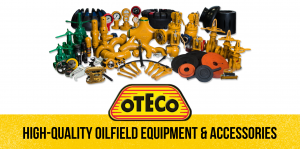
OTECO has maintained continuous manufacturing operations since 1948, evolving from a Houston-based distributorship into a vertically integrated manufacturer of specialized oilfield equipment that has become the standard specification across GCC drilling operations. With over 75 years of experience in manufacturing equipment designed specifically for demanding oilfield conditions, OTECO offers a comprehensive portfolio of drilling floor equipment, pressure control devices, and rig tools engineered to meet API standards, wellhead testing requirements, and HSE drilling rig inspection protocols.
This comprehensive guide explores OTECO’s top products—the equipment selections that drilling contractors, well operators, and E&P companies across the Middle East consistently specify for critical drilling applications. Understanding these products enables procurement teams to make informed decisions that reduce downtime, enhance operational efficiency, and ensure regulatory compliance across their rig fleets.
Contents
- 1 Understanding API Standards for Equipment Testing and OTECO’s Compliance Framework
- 2 OTECO Tong Pull-Back Straps: Automating Drilling Floor Efficiency While Meeting API RP 7L Standards
- 3 OTECO Balancing Straps: Reducing Operator Fatigue and Enhancing Drilling Floor Safety
- 4 OTECO Reset Relief Valve (RRV): Protecting Mud Systems from Over-Pressurization
- 5 OTECO Box Wrench: Precision Tooling for High-Pressure Drilling Connections
- 6 OTECO Mud Guards and Oil Guards: Environmental Protection and Operational Efficiency
- 7 OTECO Pipe Wipers and Flap Wheels: Precision Rubber Manufacturing for Drilling Operations
- 8 Non-Destructive Testing Methods for OTECO Product Verification
- 9 Pressure Testing Protocols for Equipment Reliability
- 10 Material Test Certificates and Documentation Supporting Compliance
- 11 Third-Party Inspection Requirements for Equipment Verification
- 12 Why OTECO Products Represent the Top Specifications for GCC Drilling Operations
- 13 Inspection Frequency and Scheduling for Optimal Equipment Performance
- 14 Common Testing Challenges and Solutions for Equipment Reliability
- 15 Future Developments in Equipment Testing and Condition Monitoring
- 16 Regulatory Compliance and Standards Supporting Operations
- 17 Conclusion: Partnering with OTECO for Drilling Success
Understanding API Standards for Equipment Testing and OTECO’s Compliance Framework
Equipment testing encompasses far more than basic functionality checks. It involves a comprehensive evaluation through standardised protocols that verify structural integrity, performance capabilities, and compliance with industry specifications. From the initial manufacturing phase through field deployment and periodic maintenance, systematic testing ensures equipment reliability while meeting stringent regulatory requirements established by organizations like the American Petroleum Institute (API) and the International Organization for Standardization (ISO).
The American Petroleum Institute has established comprehensive standards that govern equipment testing across the oil and gas industry. API 5A represents the foundation for drill pipe inspection, establishing minimum requirements for detecting dimensional changes and structural flaws. API RP 7G-2 outlines detailed inspection procedures for used drill stem components. API 6A governs wellhead and tree equipment testing, examining mechanical properties under high-pressure, high-temperature conditions. API 16A provides requirements for blowout preventer equipment, demanding comprehensive testing protocols including pressure testing and function testing.
OTECO products are engineered to comply with all applicable API standards. Every product—from relief valves to drilling floor tools—incorporates materials, design features, and performance characteristics that satisfy or exceed these rigorous industry requirements. When you select OTECO equipment for your drilling operations, you’re choosing products with full documentation supporting API standards compliance and regulatory verification requirements.
OTECO Tong Pull-Back Straps: Automating Drilling Floor Efficiency While Meeting API RP 7L Standards
Among the most impactful products in OTECO’s portfolio, the tong pull-back strap represents a significant advancement in drilling floor automation and safety. This product directly addresses one of the most repetitive and labor-intensive tasks on modern drilling rigs: repositioning manual tongs between pipe makeup and break-out cycles.
Traditional drilling floor operations require crew members to manually reposition tongs after each pipe connection—a labor-intensive process that increases cycle time, raises operator fatigue, and creates safety exposure from manual handling of heavy tong assemblies. The OTECO automatic tong pull-back strap eliminates this manual repositioning burden by using elastomeric spring action to automatically return tongs to the side-of-floor position after use.
Available in standard sizes of 2-3/4″ and 3-1/2″ with a robust 500 lb load capacity, these tong positioning straps operate through a simple hook-over installation. One loop attaches to the tong line pin at the end of a manual tong arm, while the opposite end secures to a convenient anchor point with minimal tension required for proper operation. The system’s design allows automatic spring-back action to function reliably through thousands of makeup and break-out cycles.
From an operational perspective, OTECO tong pull-back straps deliver measurable improvements that directly impact drilling economics and safety metrics. Reduced cycle time between makeup and break-out operations translates to increased wells drilled per month. Consistent tong positioning improves drilling floor workflow and reduces misalignment issues. Minimised manual handling of heavy equipment reduces worker strain and safety incidents. Enhanced drilling rig safety results from reducing operator exposure to moving tong assemblies.
OTECO manufactures these drilling floor straps using specialised high-grade elastomer compounds specifically formulated to withstand tens of thousands of stretch-and-return cycles in harsh oilfield operating conditions. The rubber material maintains consistent spring action even after prolonged exposure to petroleum-based drilling fluids, extreme temperatures ranging from -20°F to +250°F, mechanical stress, and the harsh salt spray environment typical of GCC deepwater operations. The manufacturing process involves OTECO’s own rubber facility, where elastomer formulation and vulcanization parameters are precisely controlled.
For procurement teams in Dubai, Saudi Arabia, and throughout the GCC region, the tong pull-back strap demonstrates why OTECO products command a premium market position. The equipment delivers quantifiable operational improvements while maintaining the reliability documentation necessary for rig acceptance standards and API RP 7L inspection compliance.
OTECO Balancing Straps: Reducing Operator Fatigue and Enhancing Drilling Floor Safety
Center-latch elevator systems are fundamental to drilling operations, but their inherent weight and balance characteristics create significant ergonomic challenges and safety concerns for rig crew members working extended shifts on modern drilling rigs. The OTECO balancing strap directly addresses this operational reality by maintaining even weight distribution across the elevator assembly.
The balancing strap attaches to the link assembly using a U-bolt fastening system with lock washers and nuts specified in API RP 7L maintenance procedures. The opposite end connects to the elevator handle via a twisted metal loop configuration, allowing the strap to counterbalance the inherent weight of the elevator system. This design reduces strain on the operator’s arms, shoulders, and back during extended drilling operations—a critical consideration for crews working 12-hour rotations on busy drilling rigs.
Available in standard sizes of 2-3/4″ and 3-1/2″ to match common elevator configurations, the OTECO balancing strap integrates seamlessly with standard center-latch elevator systems without requiring modification or custom fabrication. The product integrates with different elevator models, supporting standardisation across diverse rig fleets.
From an HSE drilling rig inspection and safety culture perspective, reducing operator fatigue is far more than a comfort issue—it has direct, measurable safety implications. Fatigued crews make mistakes, work more slowly, experience reduced attention to hazards, and are more prone to accidents. By minimising the physical demands on crew members handling heavy elevators throughout their shift, OTECO’s balancing straps indirectly enhance overall drilling floor safety and contribute to lower accident rates. This benefit directly aligns with the safety culture emphasis mandated across GCC drilling operations, where HSE performance directly influences contract renewals and regulatory standing with authorities in Dubai and Abu Dhabi.
OTECO manufactures balancing straps using the same high-performance elastomer technology applied across its product line. The metal components incorporate corrosion-resistant materials suitable for both onshore operations and offshore environments where saltwater spray accelerates corrosion. Complete assembly documentation includes U-bolt specifications with lock washers to prevent loosening under vibration—details specified in API RP 7L inspection procedures and regulatory compliance requirements.
OTECO Reset Relief Valve (RRV): Protecting Mud Systems from Over-Pressurization
Pressure control represents one of the most critical safety functions in drilling operations. The OTECO Reset Relief Valve (RRV) occupies a central role in comprehensive pressure protection strategies across the GCC region and globally. This equipment protects slush pumps and mud manifolds from dangerous over-pressurization events that could damage expensive systems, rupture high-pressure hoses, create environmental spills, or threaten personnel safety.
The RRV functions through a dual-action pressure relief mechanism specifically designed for drilling mud circulation systems. When system pressure exceeds the preset threshold established during drilling operations planning, the valve automatically snaps to the full-open position, venting excess pressure and preventing catastrophic system failure. This automatic function operates continuously throughout drilling operations without requiring operator intervention.
Alternatively, drilling crew members can manually trigger relief by pressing the release button—a critical feature that enables quick system depressurization during emergencies, emergency shutdown procedures, or planned maintenance work. A visible position indicator on the release button provides at-a-glance confirmation of whether the valve is open or closed, enhancing operational awareness and reducing potential for operator error.
What distinguishes OTECO RRV design from competing relief valve products is its pressure setting precision and ease of adjustment. The valve incorporates an adjustable pressure setting indicator calibrated in metric units standard across GCC drilling operations, allowing qualified operators to dial in any setting within the operating range—available in 1500/5000 psi and 1500/8000 psi configurations—by simply turning the adjustment nut. This precision maintains +/- 5% accuracy throughout the valve’s service life, which is critical for meeting API 6A wellhead equipment standards and protecting equipment rated for specific maximum working pressures.
The engineering approach emphasises durability and reliability under continuous operation in harsh environments. Internal components incorporate stainless steel piston technology and cadmium-plated valve bodies that resist corrosion from exposure to drilling fluids, synthetic mud systems, oil-based muds, and the saltwater environments typical of offshore GCC deepwater operations. A fully enclosed bonnet assembly retains protective grease coating on all moving parts, extending service life and reducing maintenance frequency compared to older exposed-piston designs.
Unlike older relief valve designs requiring shear pins that wear out and need replacement after each relief cycle, the OTECO RRV eliminates this recurring maintenance burden and associated equipment downtime. The bonnet assembly maintains full interchangeability with Cameron Type ‘A’ and Type ‘B’ reset relief valves, simplifying spare parts logistics for drilling contractors operating mixed equipment.
Major repair kits, minor repair kits, and individual replacement components remain readily available through authorised OTECO suppliers in the UAE, Saudi Arabia, Qatar, Kuwait, and throughout the MENA region. This spare parts availability eliminates extended downtime waiting for specialised repair components and supports the rig spare parts supplier relationships necessary for 24/7 drilling operations.
For procurement teams evaluating relief valve options in Dubai and the GCC region, the OTECO RRV represents the standard specification across major operators. Documentation includes manufacturing certifications, material test certificates, hydrostatic pressure test reports, and dimensional compliance records—documentation required for demonstrating API 6A compliance and rig acceptance standards.
OTECO Box Wrench: Precision Tooling for High-Pressure Drilling Connections
Box wrenches are often overlooked in discussions of equipment selection, yet they perform an essential function in making up and breaking out high-pressure connections on the drilling floor with proper torque application and minimal connection damage. The OTECO box wrench portfolio spans the complete range of drilling floor requirements, with models available in stud sizes from 0.63″ to 2.50″.
Each OTECO box wrench is precision-manufactured to exact dimensional specifications, ensuring proper fit on high-pressure connector studs and enabling proper torque transmission when making or breaking connections. The specific models include: BW5063 (0.63″ stud), BW5075 (0.75″ stud), BW5088 (0.88″ stud), BW5100 (1.00″ stud), BW5113 (1.13″ stud), BW5125 (1.25″ stud), BW5138 (1.38″ stud), BW5150 (1.50″ stud), BW5163 (1.63″ stud), BW5175 (1.75″ stud), BW5188 (1.88″ stud), BW5200 (2.00″ stud), BW5225 (2.25″ stud), BW5232 (2.32″ stud), and BW5250 (2.50″ stud).
Unlike general-purpose industrial wrenches sold through standard tool suppliers, OTECO’s drilling floor box wrenches are specifically hardened and tempered to withstand the impact loading and repetitive stress characteristic of professional drilling service. The comprehensive sizing range allows drilling contractors and rig spare parts suppliers to standardise on OTECO tooling for all connection work across their equipment fleet, improving inventory management efficiency and ensuring consistent quality across all rig assets.
From a procurement and cost management perspective, investing in a complete set of OTECO box wrenches in all required sizes eliminates the false economy of buying cheap wrenches from multiple non-specialised sources. Inconsistent tooling quality leads to connection damage, pressure leaks, reduced seal integrity, and operational delays. By investing in OTECO box wrenches, drilling contractors reduce maintenance costs through longer wrench life, improve equipment reliability through proper connection integrity, and enhance drilling floor safety through tools engineered for their specific application.
For rig acceptance standards and equipment inspection audits in Dubai and throughout the GCC region, having proper tools documented in your drilling floor inventory demonstrates professional operations management. The OTECO box wrench collection represents the standard specification across major operators and drilling contractors operating in competitive GCC markets.
OTECO Mud Guards and Oil Guards: Environmental Protection and Operational Efficiency
The OTECO mud guard and oil guard product lines address a frequently underestimated challenge in drilling operations that directly impacts both environmental compliance and operational economics: controlling drilling fluid losses during pipe handling. Drill pipe components experience continuous contact with drilling fluids that coat the exterior of the drill pipe. Without effective mud guarding and fluid containment systems, these drilling fluids splash and spill across the drilling floor during pipe handling, creating environmental hazards, increasing cleanup labour, wasting expensive drilling fluid additives, and creating HSE drilling rig inspection violations.
OTECO offers three primary guard configurations designed for different flow rates, drilling conditions, and drilling fluid volumes typical of GCC oilfield operations. The MG-600 represents the standard-duty option, featuring full-size dimensions of approximately 4′ to 5′ and accommodating drill pipe sizes from 2-3/8″ to 5-1/2″ diameter. This mud guard model is the most commonly specified for conventional drilling operations across Saudi Arabia, the UAE, and Qatar onshore drilling.
The MG-800 provides heavy-duty mud guard protection with a larger 6’16” cavity specifically designed for larger drill pipe ranging from 2-3/8″ to 6-5/8″ diameter. This larger mud guard capacity is essential for deepwater drilling operations and high-capacity rig applications where larger drill strings are deployed. The MG-800 mud guard reduces fluid losses and contains larger volumes of drilling fluid during pipe extraction and handling operations, supporting both environmental compliance and operational efficiency.
For oil circulation systems and oil-based mud drilling operations, the lightweight MG-500 oil guard measures 4’6″ and features a standard 3-inch outlet end connection, optimised for capturing and containing leaking oil while minimising splashing and environmental exposure. This oil guard is particularly valuable for specialised drilling operations and environmentally sensitive locations throughout the GCC region.
All OTECO guard models utilise replaceable end seal and side seal components available in both nitrile (red, oil-resistant) and neoprene (black, natural) rubber compounds. This design flexibility allows drilling operations to select seal materials matching their specific drilling fluid chemistry—synthetic-based mud systems, oil-based mud formulations, and water-based systems each require different elastomer seal materials for optimal performance and longevity. The quick-change seal design minimises downtime when seal replacement becomes necessary during extended drilling operations.
The operational benefits of mud and oil guards extend significantly beyond simple environmental compliance documentation. By containing drilling fluid losses and preventing spills, these guards reduce the volume of expensive mud requiring replacement—a material cost reduction that improves drilling project economics. Labour costs for rig floor cleanup and environmental remediation decrease substantially when mud containment systems function effectively. For operations in environmentally sensitive areas within the UAE and broader GCC region, where regulatory agencies and environmental authorities closely scrutinise fluid management practices and maintenance procedures, these guards provide the documentation trail proving commitment to environmental protection and HSE compliance.
OTECO Pipe Wipers and Flap Wheels: Precision Rubber Manufacturing for Drilling Operations
OTECO’s pipe wiper and flap wheel products represent the company’s core rubber manufacturing capability and specialised expertise in elastomer formulation for oilfield service. These products are not simple commodity rubber components—they require sophisticated formulation expertise, quality control procedures, and material science knowledge that distinguishes premium manufacturers like OTECO from lower-cost competitors offering inferior elastomer products.
Pipe wipers are available in multiple configurations designed for specific drilling floor applications: single wiper designs for standard applications, oval wipers for specific geometries, double wipers for enhanced protection, and handlebar variants for overhead pipe handling systems. All wipers are manufactured from either oil-resistant (red) nitrile rubber compounds or natural (black) elastomer materials, available in split, solid, and split wrap-around configurations to accommodate different drilling floor installation requirements.
Each OTECO wiper incorporates a fortified metal insert precisely moulded into resilient rubber, significantly enhancing tear resistance and load-bearing capacity during aggressive pipe handling operations. This metal reinforcement distinguishes OTECO products from competitors offering simple rubber without internal reinforcement. The engineering design ensures that wipers maintain integrity even under extreme loading conditions encountered during heavy pipe handling on modern drilling rigs.
The rubber compounds used in OTECO pipe wipers and flap wheels are specifically formulated to withstand simultaneous exposure to petroleum products, synthetic drilling fluids, extreme temperature variations from -20°F to +250°F, mechanical stress from thousands of pipe passes, and UV radiation during surface storage. The manufacturing process involves OTECO’s own vertically integrated rubber mixing and moulding facility, where formulation parameters, elastomer mixing ratios, curing temperatures, and vulcanization timing are closely controlled to ensure every wiper meets OTECO performance specifications.
This vertical integration—controlling the entire manufacturing process rather than purchasing generic rubber components from external suppliers—represents the quality assurance philosophy that has sustained OTECO’s reputation as a premium drilling equipment manufacturer since 1948. Drilling contractors and rig operators selecting OTECO rubber products benefit from decades of experience formulating elastomers specifically for oilfield service conditions, not generic applications.
Non-Destructive Testing Methods for OTECO Product Verification
Non-Destructive Testing (NDT) techniques allow comprehensive equipment evaluation without compromising structural integrity. These methods have become indispensable for oilfield operations, where equipment downtime for destructive testing is impractical and costly. OTECO products undergo rigorous NDT evaluation at multiple manufacturing stages to ensure compliance with API standards and performance specifications.
Visual Testing (VT) serves as the primary NDT method, allowing inspectors to evaluate visible surface conditions, weld quality, and structural integrity. Advanced visual inspection techniques using borescopes and remote visual inspection systems enable examination of internal surfaces and hard-to-reach areas. For safety and rig surface tools, visual inspection reveals wear patterns, crack initiation, and corrosion that could compromise operational safety.
Magnetic Particle Inspection (MPI) detects surface and near-surface discontinuities in ferromagnetic materials. This method proves particularly valuable for examining drilling tool joints, wellhead components, and other critical steel components where crack detection is essential. Ultrasonic Testing (UT) provides detailed analysis of internal structures and material properties, detecting internal flaws, measuring wall thickness, and evaluating material integrity throughout component cross-sections.
Penetrant Testing (PT) reveals surface-breaking discontinuities in non-porous materials. This method works effectively on both ferromagnetic and non-ferromagnetic materials, making it versatile for examining diverse equipment types. Advanced NDT methods, including Radiographic Testing (RT) and Eddy Current Testing (ECT), provide detailed internal examinations and detect subsurface defects that other methods might miss.
Pressure Testing Protocols for Equipment Reliability
Pressure testing represents one of the most critical evaluation methods for oilfield equipment, ensuring components can withstand operational pressures without failure or leakage. The testing protocols must be carefully planned and executed to provide accurate results while maintaining safety.
Hydrostatic Testing uses water or other incompressible liquids to pressurise equipment above normal operating levels. The standard practice involves pressurising to 1.5 times the maximum allowable working pressure (MAWP) and holding the pressure for specified durations. This method is preferred for most applications because liquids pose less risk than compressed gases if failure occurs during testing. OTECO products undergo comprehensive hydrostatic testing to verify both structural integrity and sealing capability under extreme pressure conditions, providing documentation necessary for rig acceptance standards.
Pneumatic Testing uses compressed air, nitrogen, or other gases for pressurisation. While less common due to increased safety risks, pneumatic testing becomes necessary when liquids cannot be introduced into systems due to contamination concerns. Safety protocols for pneumatic testing are particularly stringent, requiring personnel evacuation from test areas, appropriate barricading, and remote monitoring systems.
Function Testing validates equipment operation under simulated service conditions. For control systems, safety devices, and automated equipment like the OTECO reset relief valve, function testing ensures proper response to operational inputs and emergency conditions. This testing often combines pressure testing with operational cycling to verify complete system performance.
Material Test Certificates and Documentation Supporting Compliance
Material Test Certificates (MTC), also known as Mill Test Certificates, provide essential documentation verifying material properties and compliance with specified standards. These documents serve as quality assurance records that trace material properties from manufacturing through field deployment. MTC documentation must include material identification and traceability information, chemical composition analysis results, mechanical property test results, heat treatment records, dimensional verification data, and non-destructive testing results.
EN 10204 Classification establishes different levels of material certification. Type 2.1 certificates provide non-specific test results from manufacturers, while Type 3.1 certificates include specific test results with independent verification. Type 3.2 certificates require both manufacturer and independent third-party verification, providing the highest level of material certification.
For critical applications involving OTECO equipment, Type 3.1 or 3.2 certificates are typically required. These certificates must demonstrate compliance with specified material standards, including chemical composition limits, mechanical property requirements, and applicable testing standards. Traceability systems must connect MTCs with specific equipment components throughout their service life. This documentation proves essential for maintenance planning, failure investigation, and regulatory compliance verification.
Third-Party Inspection Requirements for Equipment Verification
Third-Party Inspection (TPI) provides independent verification of equipment compliance with specified requirements. Major operators increasingly require TPI services to ensure equipment meets performance and safety standards before deployment. TPI services encompass material verification, dimensional inspection, mechanical testing, non-destructive examination, pressure testing, and function testing. Qualified inspection agencies must maintain appropriate certifications and demonstrate competency in relevant standards and testing methods.
The inspection process typically begins with a review of manufacturing procedures, material certificates, and quality plans. During manufacturing, inspectors verify compliance with specifications through witness testing and hold point inspections. Final inspections confirm that completed equipment meets all specified requirements before shipment. For companies supplying oilfield equipment and tools to major operators, establishing relationships with qualified TPI agencies is essential. These partnerships ensure smooth inspection processes and help maintain delivery schedules while meeting stringent quality requirements.
Documentation from TPI activities must include detailed inspection reports, test results, non-conformance records, and certification statements. This documentation often becomes part of equipment files maintained throughout operational life.
Why OTECO Products Represent the Top Specifications for GCC Drilling Operations
After reviewing the comprehensive product portfolio, technical specifications, and quality assurance procedures, the reason drilling contractors, well operators, and E&P companies across the UAE, Saudi Arabia, Qatar, Kuwait, and throughout the GCC region consistently specify OTECO products becomes evident. These are not merely commodity items—they represent engineered solutions designed specifically for the demanding conditions of modern oilfield operations.
OTECO products deliver measurable operational improvements: reduced drilling cycle times, enhanced worker safety, improved pressure system reliability, environmental compliance documentation, and seamless integration with existing rig equipment. The comprehensive documentation supporting API standards compliance eliminates questions during rig acceptance audits. The availability of spare parts through regional suppliers in Dubai and throughout the Middle East ensures reliable 24/7 operations without extended downtime waiting for equipment.
The investment in premium OTECO products returns value through improved equipment reliability, reduced maintenance costs, enhanced safety performance, and operational consistency across multiple rig assets. For procurement teams evaluating equipment suppliers and rig spare parts vendors, the choice becomes clear: OTECO represents the combination of quality, reliability, technical depth, and regional support that distinguishes successful drilling operations in competitive GCC markets.
Inspection Frequency and Scheduling for Optimal Equipment Performance
Effective inspection programs require systematic scheduling based on equipment criticality, operating conditions, and regulatory requirements. Initial Inspections occur during the manufacturing and installation phases. These inspections verify compliance with design specifications and identify any damage that might have occurred during transportation or installation. Pre-service inspections ensure OTECO equipment readiness for operational deployment.
Routine Inspections follow predetermined schedules based on equipment type, service conditions, and operating experience. External visual inspections typically occur every five years for above-ground equipment, while internal inspections may follow longer intervals based on corrosion rates and service conditions. Special Inspections respond to unusual operating conditions, incidents, or changes in service requirements.
Risk-Based Inspection (RBI) methodologies allow optimisation of inspection intervals based on probability of failure and consequence analysis. This approach helps focus inspection resources on the highest-risk equipment while potentially extending intervals for lower-risk components. For personal protective equipment and safety tools, inspection frequencies often follow manufacturer recommendations and regulatory requirements. Daily visual inspections may be required for critical safety equipment, with more detailed inspections following periodic schedules.
Common Testing Challenges and Solutions for Equipment Reliability
Equipment testing in oilfield environments presents unique challenges that require specialised approaches and solutions. Environmental Factors, including extreme temperatures, humidity, and corrosive atmosphere, can affect testing equipment performance and result accuracy. Protective measures for instrumentation and environmental compensation in test procedures help ensure reliable results.
Access Limitations in offshore installations and remote locations can restrict testing equipment deployment and personnel access. Portable testing equipment and remote monitoring capabilities help overcome these constraints. Scheduling Constraints often limit testing windows due to operational requirements. Efficient test procedures and proper preparation help maximise testing productivity within available time frames.
Safety Considerations require careful planning and risk management throughout testing operations. Proper safety procedures, appropriate safety tools, and emergency response planning help ensure personnel protection during testing activities. Quality control challenges include maintaining consistent testing standards across multiple locations and ensuring proper documentation of all test activities. Standardised procedures and training programs help maintain consistency and compliance.
Future Developments in Equipment Testing and Condition Monitoring
Effective equipment testing programs incorporate industry best practices while adapting to evolving technologies and regulatory requirements. Continuous improvement initiatives help optimise testing effectiveness while reducing costs and improving safety. Digital Technologies, including IoT sensors, automated data collection, and cloud-based data management, are revolutionising equipment testing and condition monitoring. These technologies enable real-time monitoring and predictive maintenance approaches that can identify potential issues before they lead to equipment failure.
Advanced NDT Methods, including guided wave ultrasonics, digital radiography, and phased array ultrasonics, provide enhanced detection capabilities and improved productivity. These technologies often enable more comprehensive inspections with reduced personnel exposure and improved documentation. Risk-based approaches to testing and inspection help optimise resource allocation while maintaining safety and reliability standards. These methodologies consider equipment criticality, failure consequences, and inspection effectiveness to develop tailored testing programs.
Training and Certification Programs ensure personnel competency in testing methods and safety procedures. Regular training updates help maintain proficiency with evolving technologies and standards.
Regulatory Compliance and Standards Supporting Operations
Equipment testing must comply with applicable regulatory requirements and industry standards. Regional variations in requirements necessitate a thorough understanding of local regulations and international standards applicable to specific operations. API standards provide comprehensive guidance for oil and gas equipment testing, while ASME codes address pressure vessel and piping system requirements. International standards, including ISO specifications, often apply to global operations.
Regulatory agencies, including BSEE, OSHA, and regional authorities, establish mandatory requirements for equipment testing and inspection. Compliance documentation must be maintained throughout the equipment’s service life. For operations involving industrial oils and lubricants, environmental regulations may impose additional testing requirements for containment systems and environmental protection measures.
OTECO products meet all applicable regulatory requirements across GCC operations. Complete documentation supporting compliance with API standards, ASME codes, and regional requirements is available through authorised suppliers, ensuring streamlined rig acceptance processes and regulatory verification.
Conclusion: Partnering with OTECO for Drilling Success
Comprehensive equipment testing and inspection protocols form the foundation of safe and reliable oilfield operations. From initial manufacturing verification through periodic in-service inspections, systematic testing ensures equipment integrity while meeting regulatory requirements and industry standards. Success requires understanding applicable standards, implementing appropriate testing methods, maintaining proper documentation, and continuous improvement of testing procedures.
The OTECO product portfolio represents the culmination of over seven decades of engineering expertise, quality manufacturing, and field-proven reliability across the most demanding drilling environments. Each product—from tong pull-back straps and balancing straps to reset relief valves, box wrenches, mud guards, and elastomer components—has been designed, tested, and refined to deliver superior performance while meeting API standards compliance requirements and supporting operational excellence.
Investment in qualified personnel, appropriate testing equipment, and robust quality management systems provides the foundation for effective testing programs. As the industry continues evolving toward increased digitalisation and automation, testing protocols must adapt while maintaining the rigorous standards that ensure operational safety and reliability. Companies that master these comprehensive testing approaches while selecting premium equipment like OTECO products position themselves for sustained success in the demanding oilfield environment.
For organisations seeking to enhance their equipment selection, testing capabilities, and operational reliability, partnering with experienced suppliers who understand these complex requirements provides valuable support in maintaining operational excellence while meeting evolving industry standards. Explore OTECO’s complete product range today, or contact Triune General Trading LLC to discuss how premium oilfield equipment can support your drilling operations across the UAE, Saudi Arabia, Qatar, Kuwait, and throughout the GCC region. Our team of drilling equipment specialists is available to provide technical guidance, equipment specifications, competitive pricing, and the responsive service that positions your operations for success in competitive Middle East drilling markets.


